
Yoga Aasan: The Path to a Healthier Body and Mind
Yoga is much more than just physical exercise—it’s a way of life. The word ‘Aasan’ (or Asana) in Sanskrit means a seated or steady posture. In yoga, each aasan refers to a specific posture designed to enhance flexibility, build strength, and bring mental peace. These poses help balance the body, calm the mind, and improve overall well-being.
What is a Yoga Aasan?
A yoga aasan is a physical position practiced as part of yoga. Each pose has unique benefits that target different parts of the body and mind. While some poses are energizing and strengthen the core, others are restorative and deeply relaxing. Regular practice of yoga aasan improves posture, aids digestion, reduces stress, and boosts immunity.
Benefits of Practicing Yoga Aasan
- Improves Flexibility: Over time, yoga stretches muscles and increases the range of motion.
- Enhances Strength: Many poses involve body-weight resistance, helping to build lean muscle.
- Boosts Mental Clarity: The breathing techniques and stillness in yoga calm the mind and reduce anxiety.
- Promotes Better Posture: Regular practice aligns the spine and improves how you carry your body.
- Aids in Digestion & Circulation: Twisting and stretching poses stimulate internal organs.
Popular Yoga Aasans for Beginners
Tadasana (Mountain Pose):
A basic standing pose that improves posture and balance.
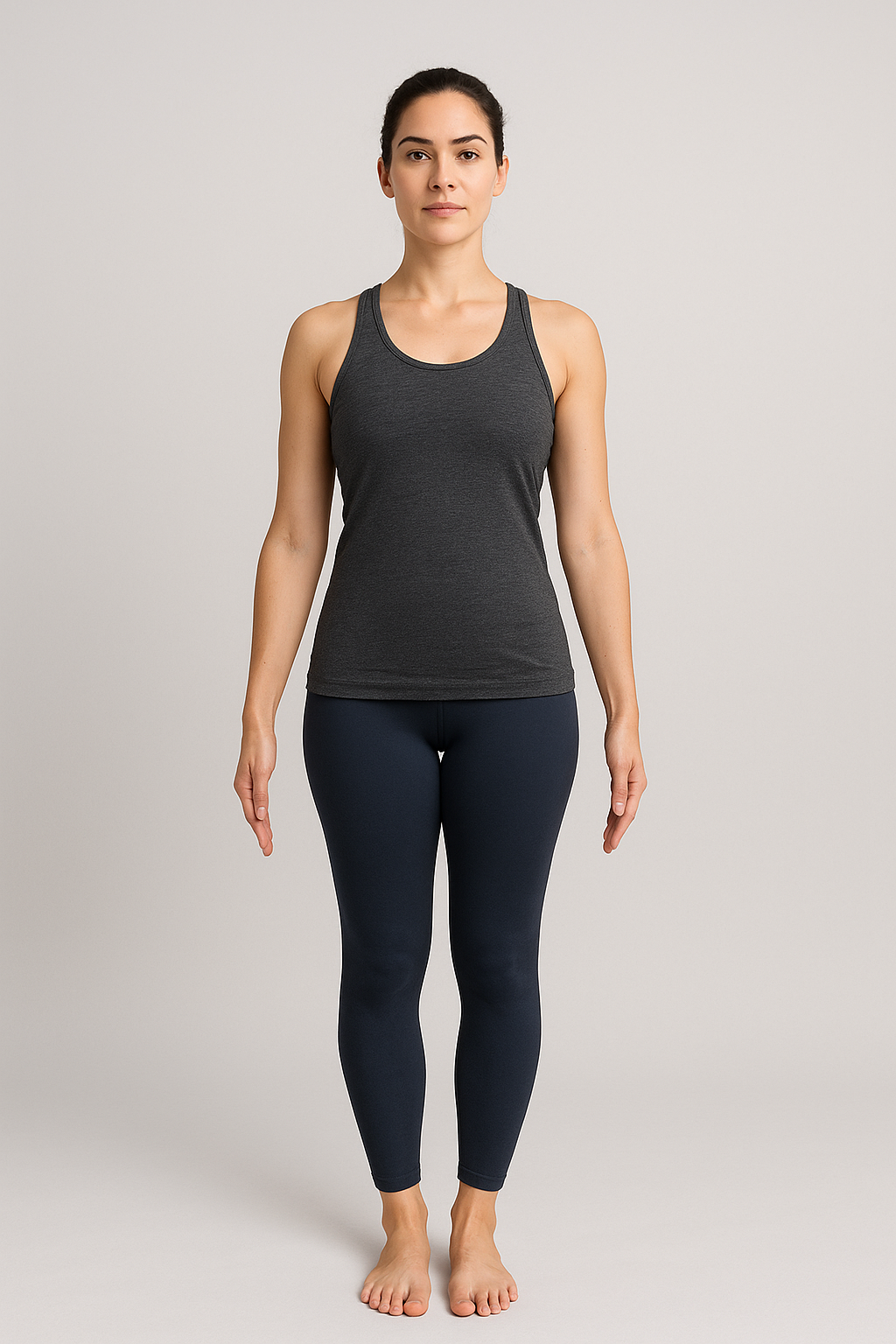
Tadasana (Mountain Pose)
Tadasana, also known as Mountain Pose, is a foundational yoga asana that emphasizes alignment, stability, and mindfulness. Though it may appear simple, this pose engages multiple muscle groups and promotes physical and mental balance. In Sanskrit, “Tada” means mountain, and “Asana” means pose, symbolizing strength, stillness, and groundedness.
To perform Tadasana, stand upright with feet together, arms relaxed alongside the body. Distribute your body weight evenly across both feet. Engage the thigh muscles without locking the knees, lengthen the spine, and lift the chest. Keep the shoulders relaxed and away from the ears. The head should be aligned with the spine, and the chin parallel to the floor. Breathe deeply and evenly, maintaining focus and calm.
This asana improves posture, enhances body awareness, and can help relieve sciatica. It also strengthens the thighs, knees, and ankles while firming the abdomen and buttocks. Beyond physical benefits, Tadasana fosters mental clarity and concentration, making it an excellent starting position for many standing yoga poses. Ladies Yoga Pants are best for Yoga asana workout
Practicing Tadasana regularly encourages a sense of grounding and balance, both physically and emotionally, helping individuals cultivate a poised and confident presence in their daily lives.
Vrikshasana (Tree Pose): Enhances balance and concentration.
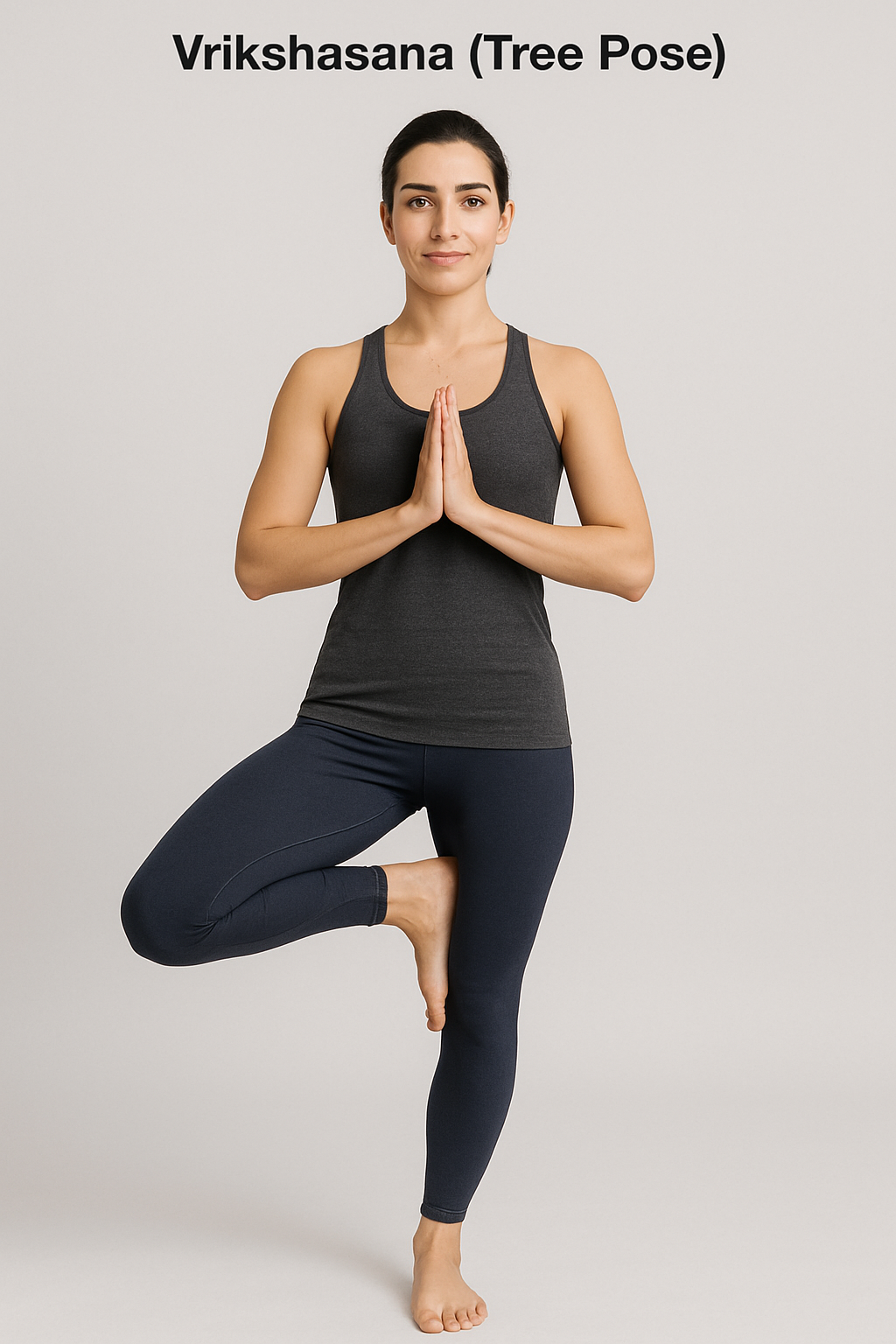
Vrikshasana, commonly known as Tree Pose, is a classic balancing asana that embodies grace, stability, and poise. The Sanskrit word Vriksha means “tree,” and this pose encourages practitioners to cultivate the grounded strength and serene presence of a tree. It is suitable for practitioners of all skill levels and offers both physical and mental benefits.
To perform Vrikshasana, start in Tadasana (Mountain Pose). Shift your weight onto the right foot, keeping the leg firm and straight. Bend the left knee and place the sole of the left foot high on the right inner thigh or calf (never directly on the knee). Bring the hands into a prayer position at the chest or stretch them overhead for a deeper challenge. Maintain a steady gaze at a fixed point to aid balance. Hold the position for 20 to 60 seconds, then repeat on the other side.
Practicing Vrikshasana improves balance, strengthens the legs, ankles, and spine, and enhances concentration. It opens the hips and stretches the groin and inner thighs. Beyond the physical, it cultivates mental focus, patience, and inner calm.
Incorporating Tree Pose into your routine promotes resilience and balance, not only on the mat but also in everyday life.
Bhujangasana (Cobra Pose): Opens the chest and strengthens the spine.
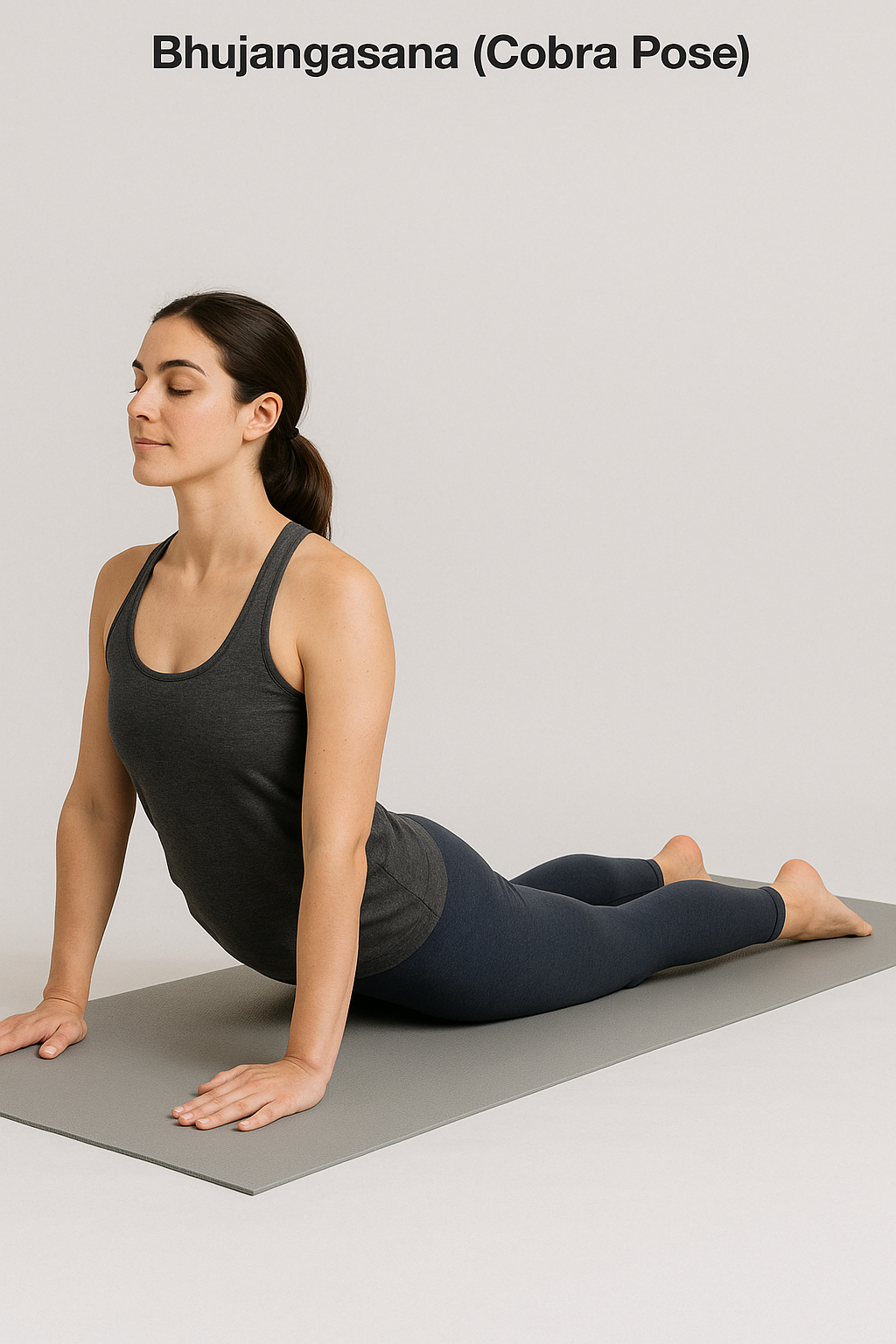
Bhujangasana, also known as Cobra Pose, is a rejuvenating backbend commonly included in yoga sequences, especially in Sun Salutations. Derived from the Sanskrit words Bhujanga (cobra) and Asana (pose), this asana mimics the poised, upward lift of a cobra ready to strike, symbolizing strength and flexibility.
To perform Bhujangasana, start by lying flat on the stomach with legs extended and the tops of the feet pressing into the mat. Place the palms under the shoulders, keeping the elbows close to the body. As you inhale, engage the back muscles and gently lift the chest off the ground, using minimal pressure from the hands. Keep the elbows slightly bent and the shoulders relaxed away from the ears. The gaze can be forward or slightly upward without compressing the neck. Hold the pose for 15 to 30 seconds, breathing deeply.
Bhujangasana offers numerous benefits. It strengthens the spine, tones the buttocks, and stretches the chest, shoulders, and abdomen. Regular practice can improve posture, relieve stress, and alleviate lower back pain. Additionally, it stimulates abdominal organs, enhancing digestion and reducing fatigue.
Incorporating Cobra Pose into your yoga routine can help develop resilience, flexibility, and a sense of renewed energy.
Savasana (Corpse Pose): A relaxation pose that helps absorb the benefits of your practice.
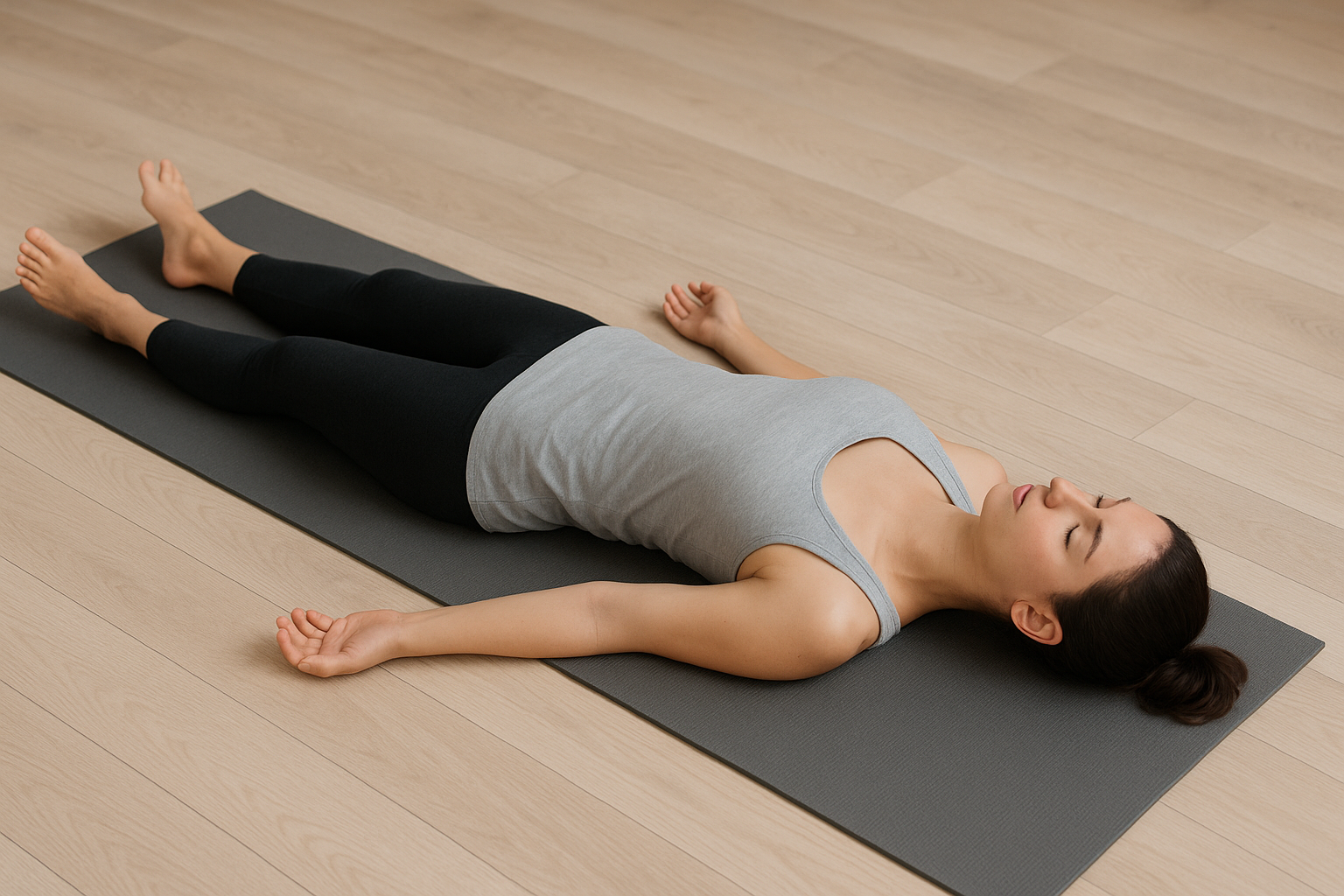
Savasana, or Corpse Pose, is the final relaxation pose traditionally practiced at the end of a yoga session. Though it appears simple, Savasana is a deeply restorative asana that allows the body and mind to fully relax and absorb the benefits of the preceding practice. The Sanskrit word Sava means “corpse,” symbolizing complete surrender and stillness.
To practice Savasana, lie flat on your back with your legs comfortably apart and arms resting at your sides, palms facing upward. Close your eyes and bring your attention to the breath, allowing it to flow naturally. Ensure the entire body is supported and relaxed, releasing any tension from the toes to the crown of the head. Stay in this pose for 5 to 15 minutes, or longer if desired.
Savasana offers numerous benefits. Physically, it helps to lower blood pressure, reduce muscle tension, and alleviate fatigue. Mentally, it calms the nervous system, decreases anxiety, and promotes emotional balance. It also aids in integrating the physical and mental efforts of the yoga practice, fostering a deep sense of peace and rejuvenation.
By incorporating Savasana into your routine, you cultivate mindfulness and resilience, promoting overall well-being both on and off the mat.
Adho Mukha Svanasana (Downward-Facing Dog Pose).
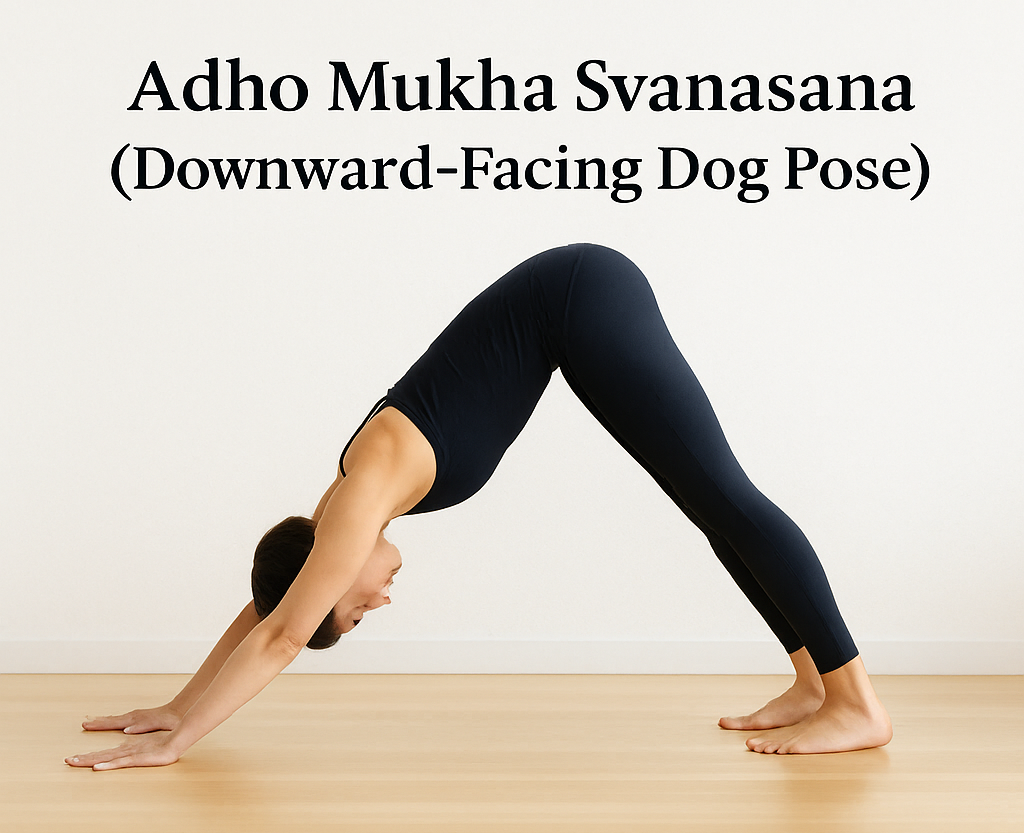
Adho Mukha Svanasana, commonly known as Downward-Facing Dog, is a foundational pose widely practiced in yoga sessions, particularly in sequences like Sun Salutations. The Sanskrit terms Adho means “downward,” Mukha means “face,” and Svanasana means “dog posture,” reflecting the body’s resemblance to a stretching dog.
To enter the pose, begin on all fours with hands shoulder-width apart and knees hip-width apart. Tuck the toes under and, as you exhale, lift the hips toward the ceiling, straightening the legs as much as comfortable. Press the hands firmly into the mat, spreading the fingers wide. Aim to bring the heels toward the floor while keeping the spine elongated and the neck relaxed. The body should form an inverted V-shape.
This asana offers numerous benefits. It strengthens the arms, shoulders, and legs while stretching the hamstrings, calves, arches, and hands. It decompresses the spine and helps relieve back pain. Downward-Facing Dog also stimulates blood flow, improves circulation, and calms the mind, reducing stress and mild depression.
Yoga asana needs super soft Yoga T-Shirts For Women to add extra comfort while doing Yoga.
Incorporating Adho Mukha Svanasana into your routine fosters both strength and flexibility, serving as a transitional or resting pose that refreshes both the body and mind.
Trikonasana (Triangle Pose)
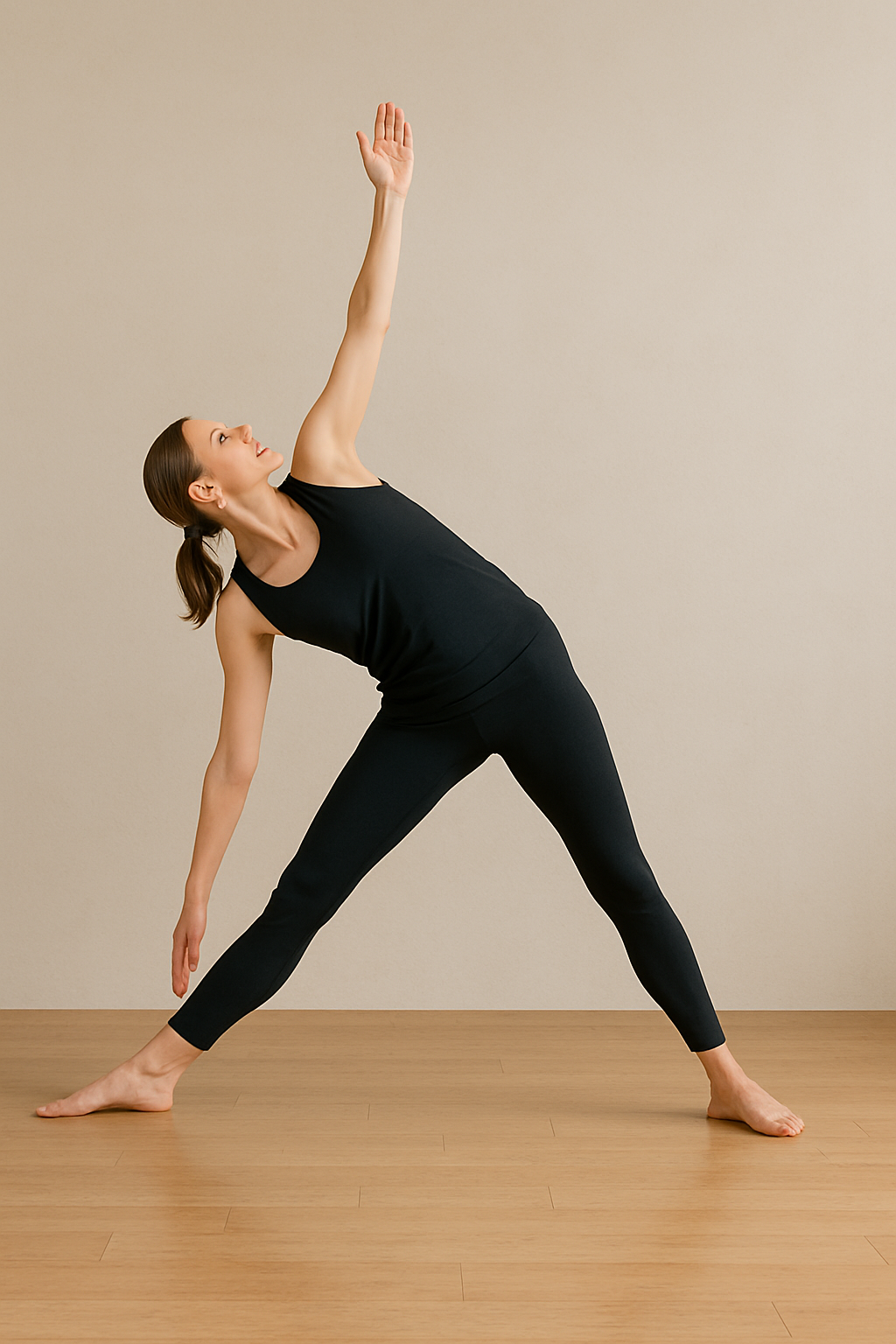
Trikonasana, or Triangle Pose, is a foundational standing asana that promotes strength, balance, and flexibility. The name derives from the Sanskrit words Trikona (triangle) and Asana (pose), highlighting the triangular shape formed by the body during the posture.
To perform Trikonasana, begin standing tall with feet wide apart. Turn the right foot out 90 degrees and the left foot slightly inward. Extend both arms parallel to the floor, palms down. As you inhale, reach the right hand forward and, on the exhale, lower it to rest on the shin, ankle, or the floor beside the right foot. Simultaneously, extend the left arm toward the ceiling, keeping both arms aligned. Gaze at the left thumb or look straight ahead if that’s more comfortable. Engage the thigh muscles and ensure the torso remains open, avoiding any forward collapse. Hold the position for 20 to 30 seconds before switching sides.
Trikonasana strengthens the legs, knees, and ankles while stretching the hips, groins, hamstrings, and calves. It also opens the chest and shoulders, improving posture and breathing capacity. Mentally, this pose encourages focus, balance, and a sense of grounded stability.
Regular practice of Trikonasana enhances overall body awareness and can aid digestion, reduce stress, and boost confidence.
There are countless variations and combinations, making a definitive count impossible. Some estimates suggest over 8,400 asanas, but many are variations of a smaller set of foundational poses. Modern yoga practice typically focuses on a range of 50 to 200 asanas.
Tips Before You Begin
- Practice on an empty stomach or at least 2 hours after a meal.
- Use a yoga mat and wear comfortable clothing.
- Focus on breathing deeply and evenly throughout each pose.
- Don’t push yourself—listen to your body and avoid pain.
Conclusion
Yoga aasan offers a simple yet powerful way to enhance your health. Whether you’re trying to relieve stress, increase flexibility, or just stay fit, incorporating a few aasans into your daily routine can make a big difference. Begin with the basics, stay consistent, and you’ll soon experience the physical and mental benefits of yoga.