
Proper arrangement of the wiring system of your house is a sure way of keeping the house safer, more efficient, and comfortable to live in. Loose wiring, tangled wires, overstuffed sockets, and unprotected wiring joints pose a lot of risks and might complicate even basic electrical installations.
It should be noted that organizing your house wiring need not be done through a renovation project. Small measures like tidying cables, using cable ties, protecting joints, and maintaining electrical appliances will make a great difference.
No matter whether it is organizing the wiring for your new home office, entertainment devices, or your general household wiring, here are some tips for you.
1. Keep Electrical Cables Organized
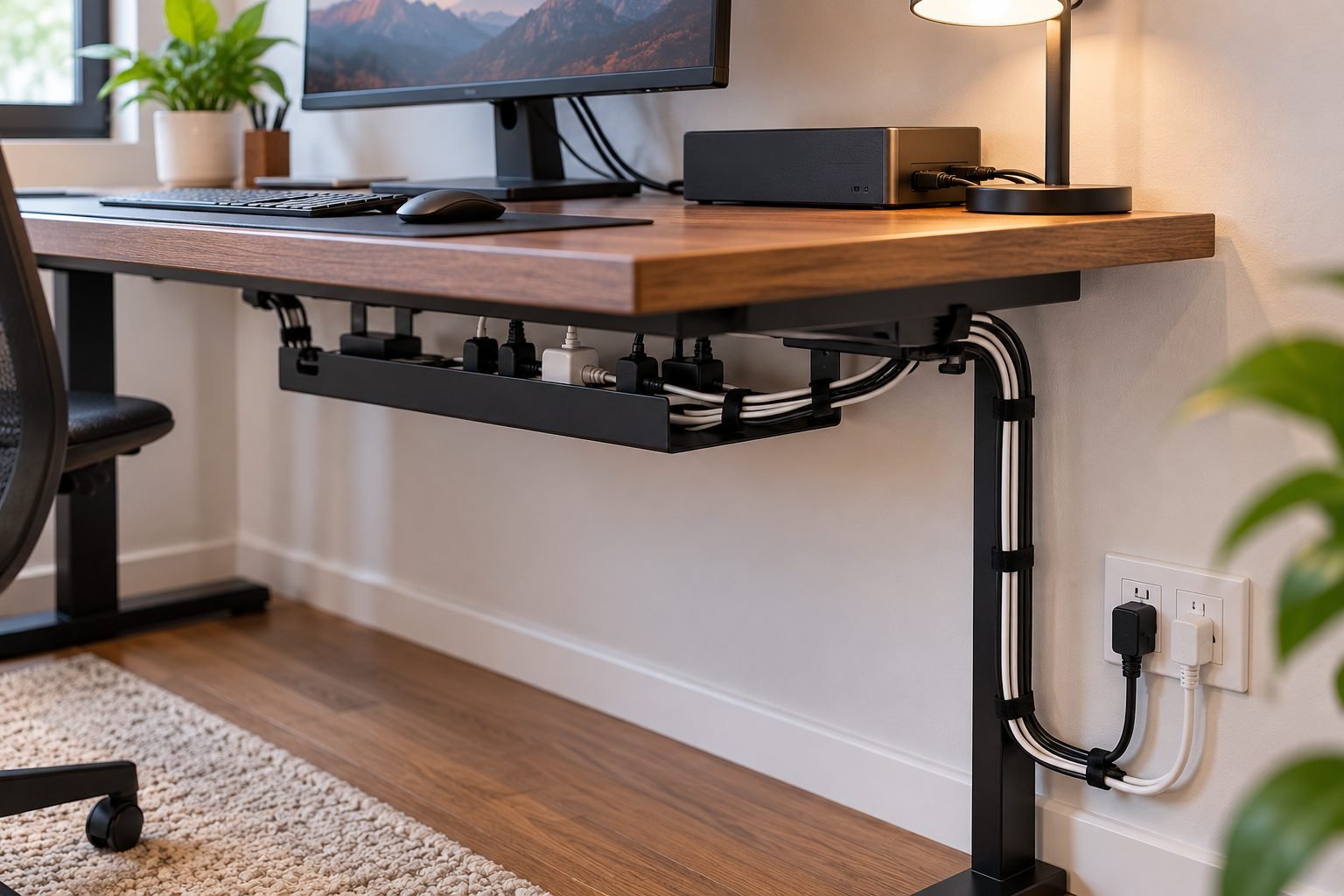
The simplest way of improving the home wiring is organizing the cables according to their function. Numerous computer cables, TV cables, router cables, charging cables, and other cables will be rapidly accumulated because of various household appliances. Such a method of organizing cables is effective even in home workshops where many cables are required for Industrial Electrical Power Tools and other electrical appliances.
Cables should not lie on the floor but be kept together and arranged along the walls, tables, or any other suitable place. Cable ties will help organize numerous cables in one convenient package. There are many kinds of cable ties made of various materials and having different sizes; thus, one may choose the most suitable type.
While using cable ties, one should avoid excessive tightness to prevent stressing the cable insulation.
2. Avoid Loose Wires on the Floor
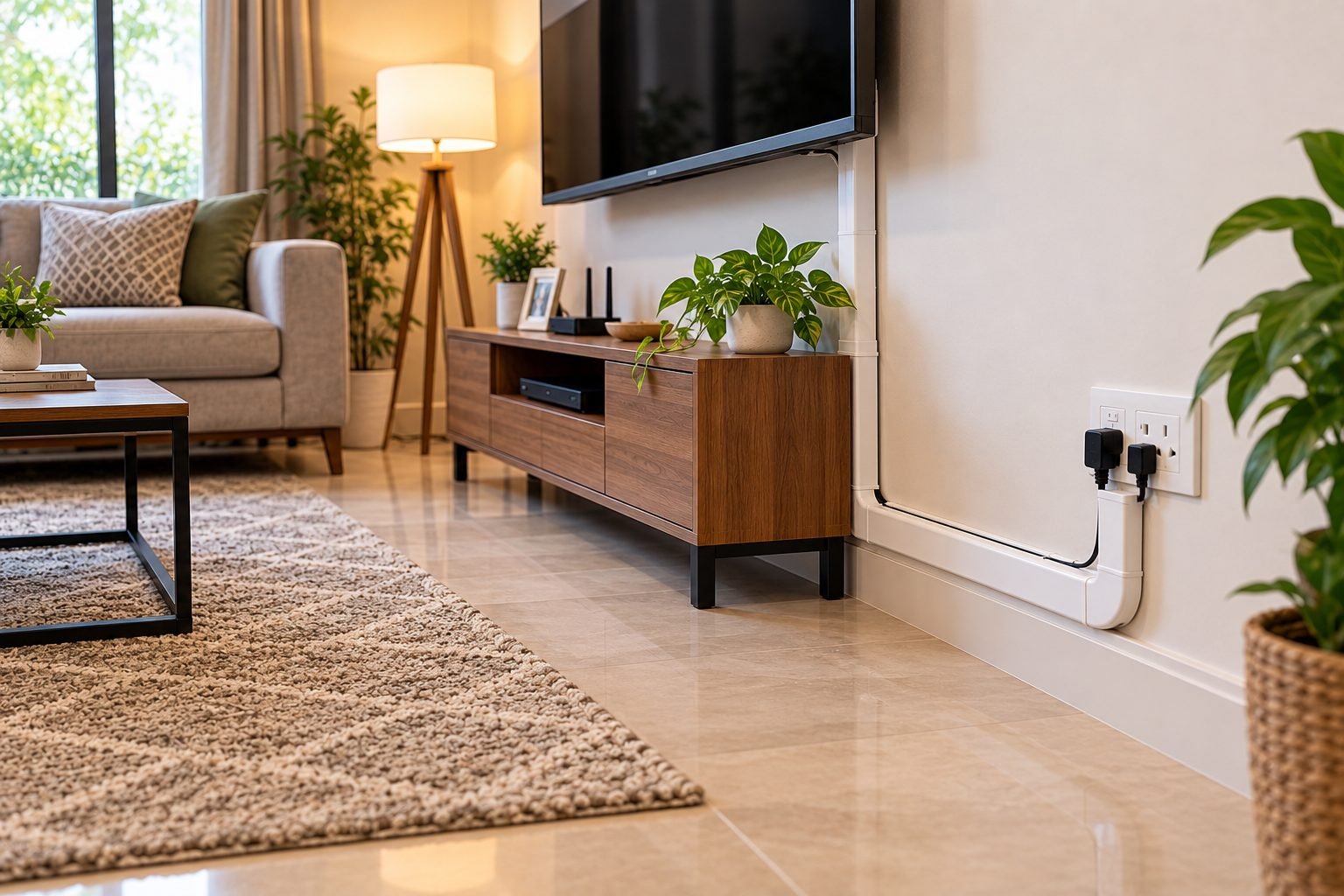
Loose wires on the floor can pose a risk of tripping. They are likely to get pulled up without intention by walking over them or moving any objects over them.
When feasible, make the cables run alongside the walls of the room or behind appropriate furniture. The use of wire ties and clips will ensure the safety of the cables.
For commonly used spaces, including a home office, consider installing a dedicated path for the power and data cables.
3. Do Not Overload Electrical Sockets
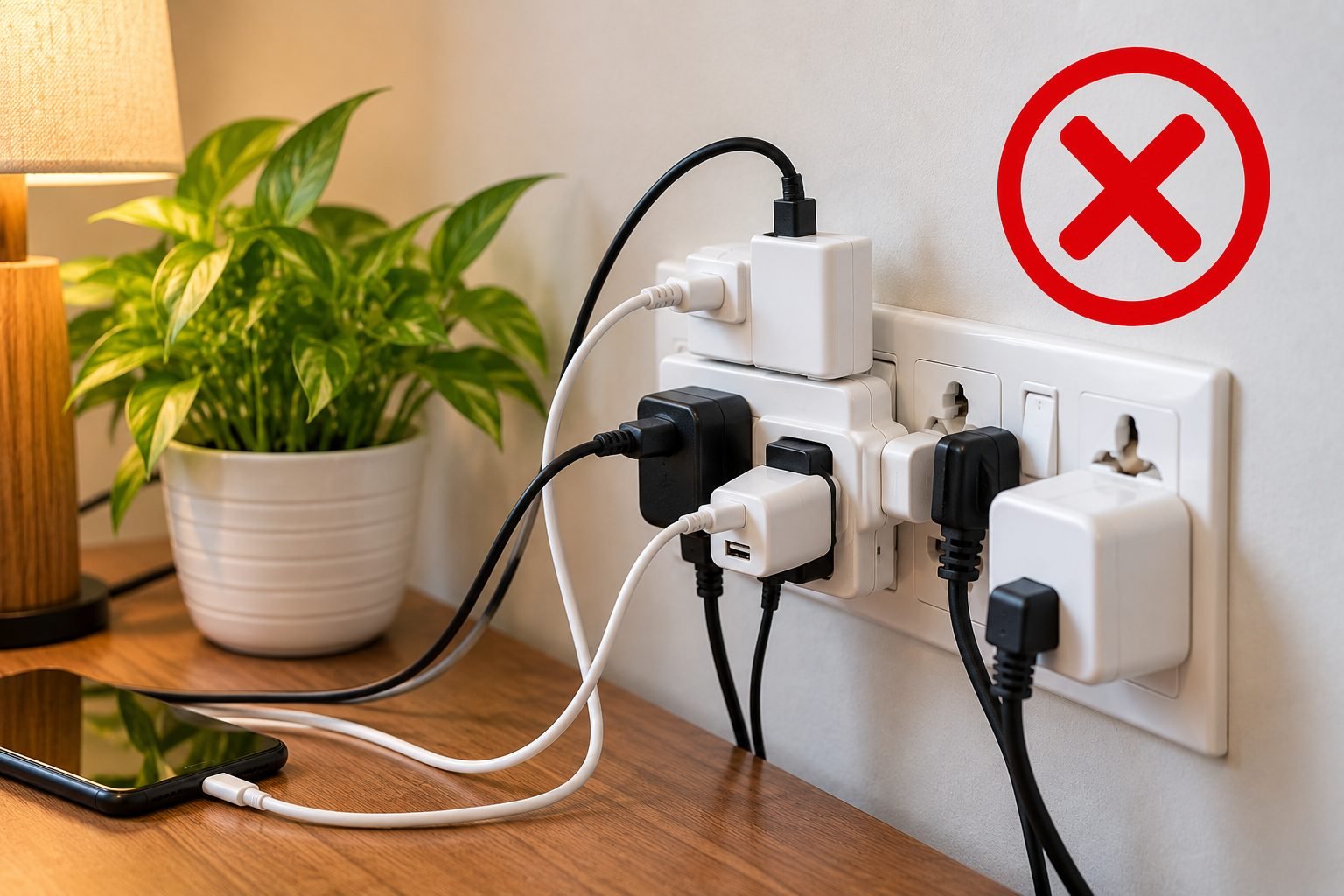
Organizing cables is not all that is involved in electrical safety. It is also important how many devices you attach to one plug.
Try not to connect too many devices using multiple plugs and adapters to one outlet. Devices like heaters, ovens, irons, and other equipment with high loads will need a lot of electricity.
In case you always need more plugs in certain areas, then you can consult an electrician regarding the installation of new sockets if needed.
4. Check Cables for Visible Damage
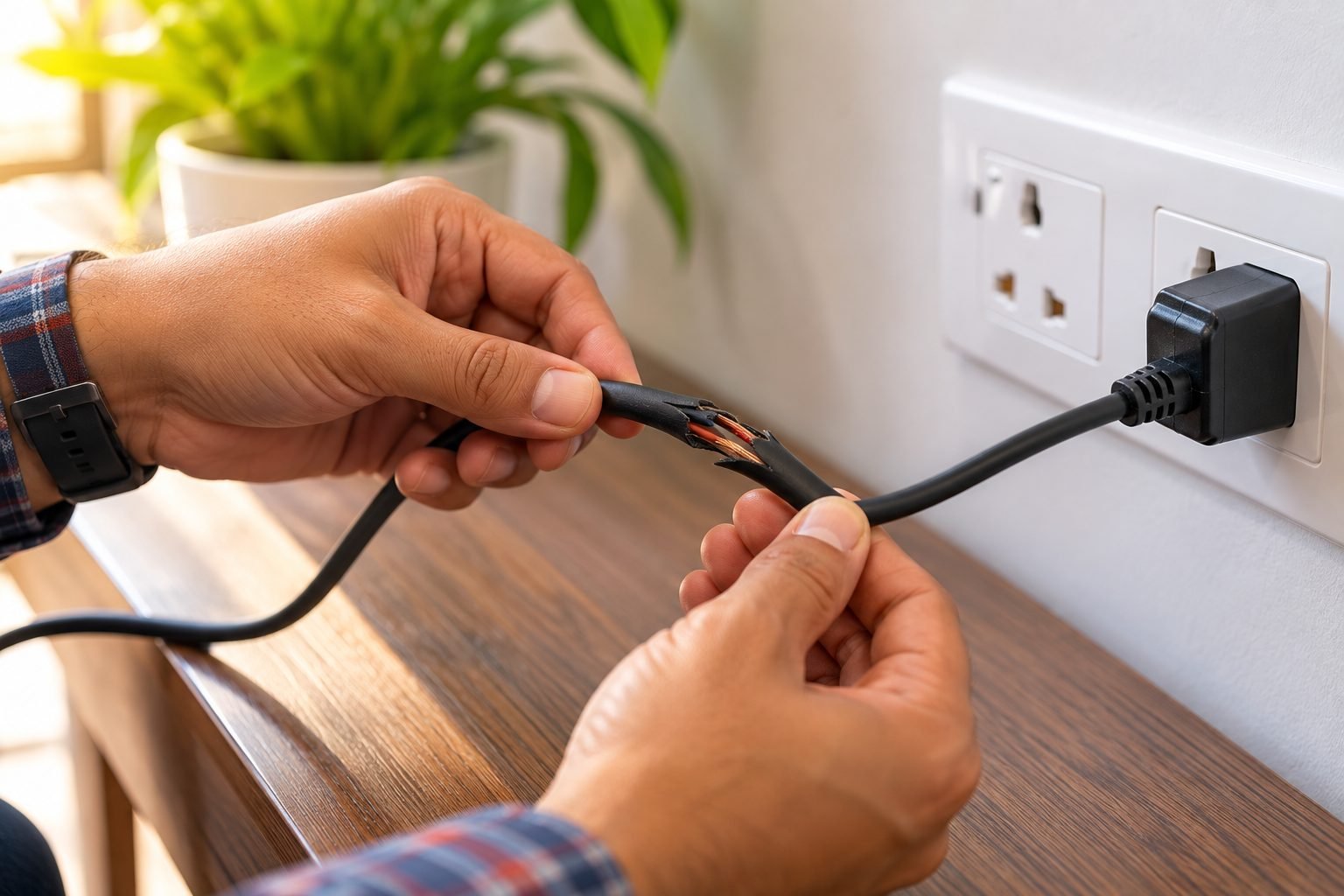
It is recommended that electrical cables be regularly inspected for any sign of damage, such as:
- Cut or broken insulation
- Conductors exposed
- Burning or scorching marks
- Melting spots
- Loosened plugs
- Discoloration
- Deteriorated connectors
Do not tape up a cable that is found to have any problems and put it back to use until you are sure what the problem really is.
If the cable/connection looks hazardous, disconnect it from where it is safe and notify a qualified electrician about it.
5. Use the Right Cable Management Accessories
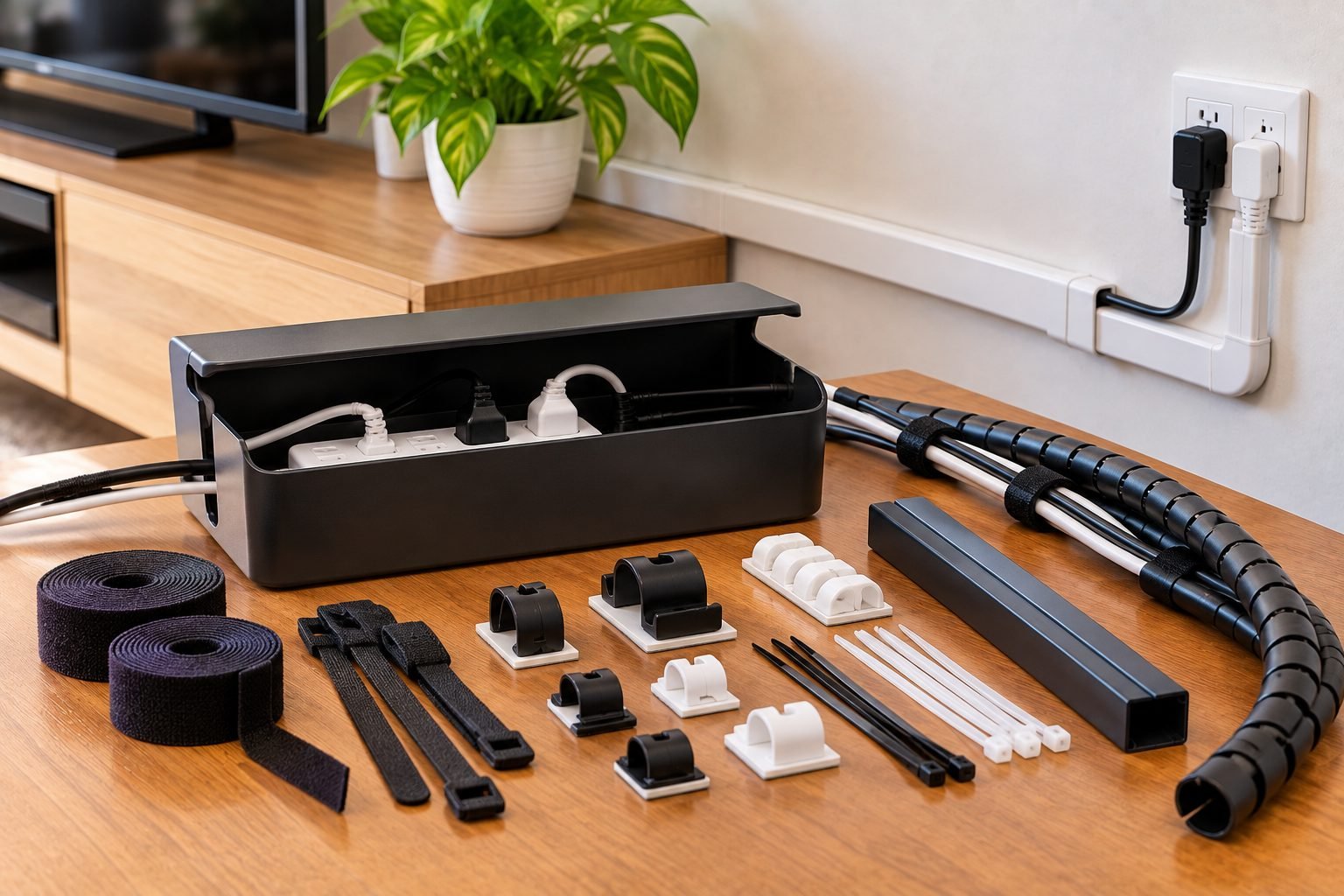
Various wiring scenarios will require different cable management accessories. Small wiring will require simple cable ties or clips, but large-scale wiring will require conduits, cable trays, glands, among other protective accessories.
Apply the appropriate accessories based on factors such as cable size, environment, temperature, installation process, and extent of protection.
For instance, the appropriate protection for outdoor cable is likely to be different from that of an indoor cable in a dry place. In addition, the type of protection that should be applied to cables undergoing mechanical movement should differ.
Applying proper accessories prevents unnecessary strain on the wires.
6. Understand the Role of Bimetallic Cable Lugs
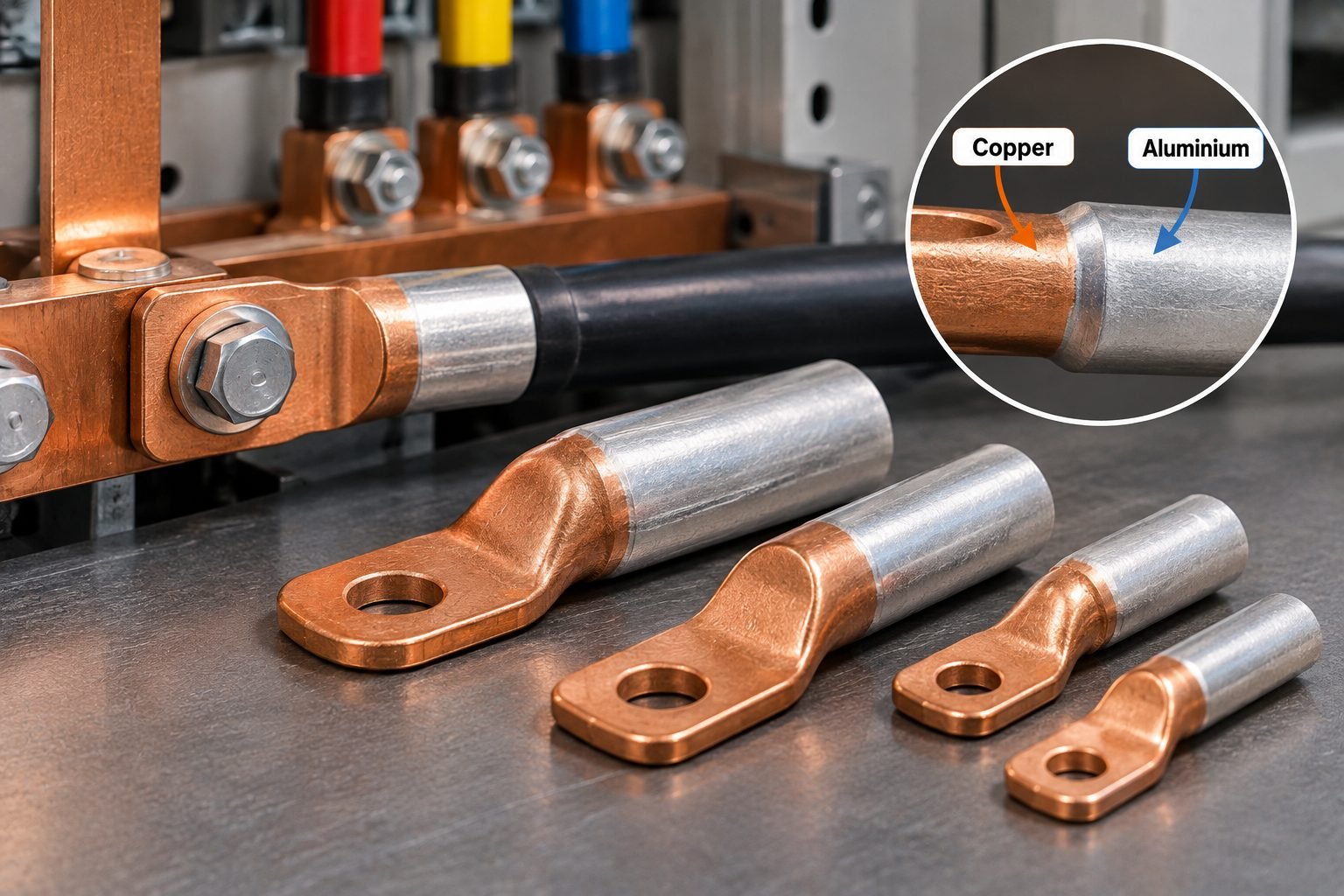
Organizing cables is very essential, but ensuring that you have a good electrical connection is also very important. If there is an application that requires connection of different types of metals, then Bimetallic Cable Lugs may be useful.
Bimetallic cable lug is a type of connector which connects aluminum conductor and copper connection point. These kinds of connectors are usually used when there is need to consider compatibility between various conductive metals.
For instance, in case the aluminum cable is supposed to connect to a copper busbar or terminal, it will be wise to use an appropriate bimetallic connection. This will solve problems arising out of aluminum-to-copper connection.
However, choosing the right kind of lug depends on several factors like conductor size, conductor material, application and equipment. Installation of the lug must also be in accordance with manufacturers’ instructions and electrical standards.
In household circuits, installation or modification of any electrical terminal is not advisable for homeowners.
7. Keep Power and Data Cables Organized
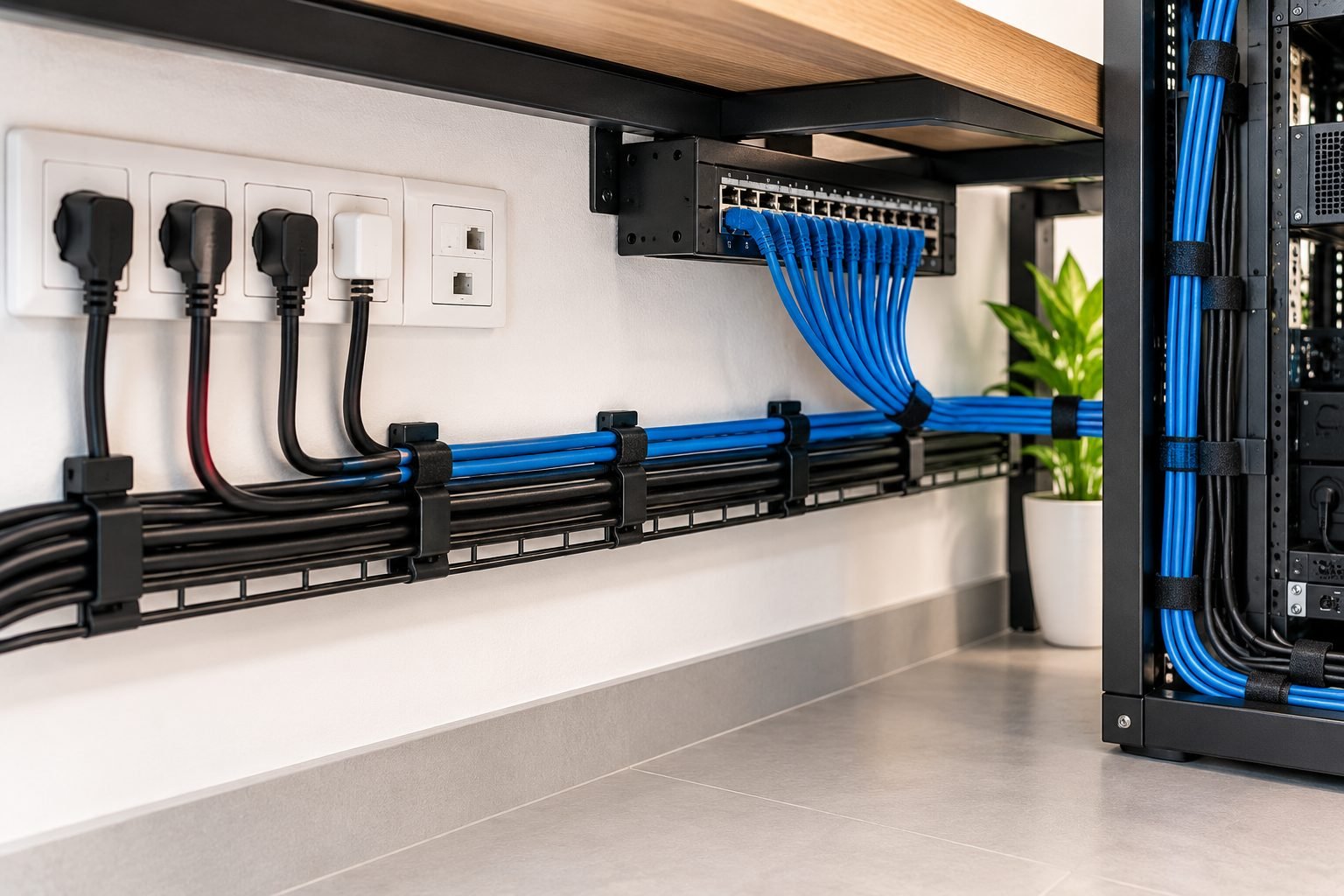
It is common for modern houses to be equipped with electrical cables as well as communication cables. The computer, Wi-Fi, television, speakers, security systems, and other electronics can complicate the wiring.
Categorize cables according to their end destination where possible. For instance, you may categorize them according to which system they are meant for.
Labeling cables will help save time when trying to troubleshoot any issues. You will not have to try and trace all the cables to figure out which one is connected to what device.
8. Do Not Bend Cables Too Sharply
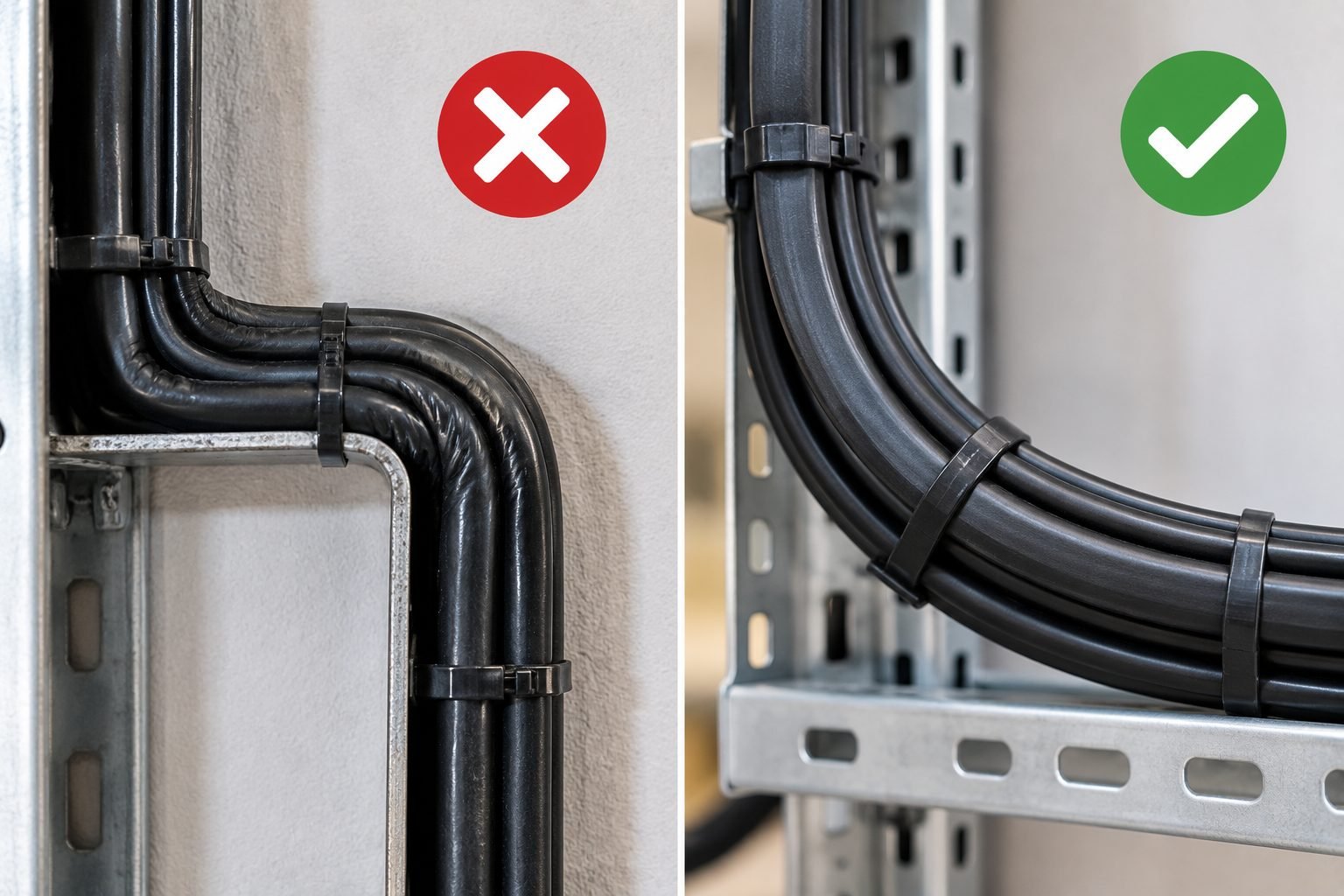
Electrical cables can be bent up to certain degrees. Over-bending puts stress on both the conductors and insulations inside.
When positioning cables, one should try to avoid sharp bends and allow smooth bending. Avoid using cables under large pieces of furniture and behind doors.
Cable ties may come in handy when arranging cables; however, it is important to ensure that the cable is not forced into any shape.
If there is a cable connecting some equipment that requires frequent adjustment, allow enough slack for this.
9. Keep Electrical Connections Away From Moisture
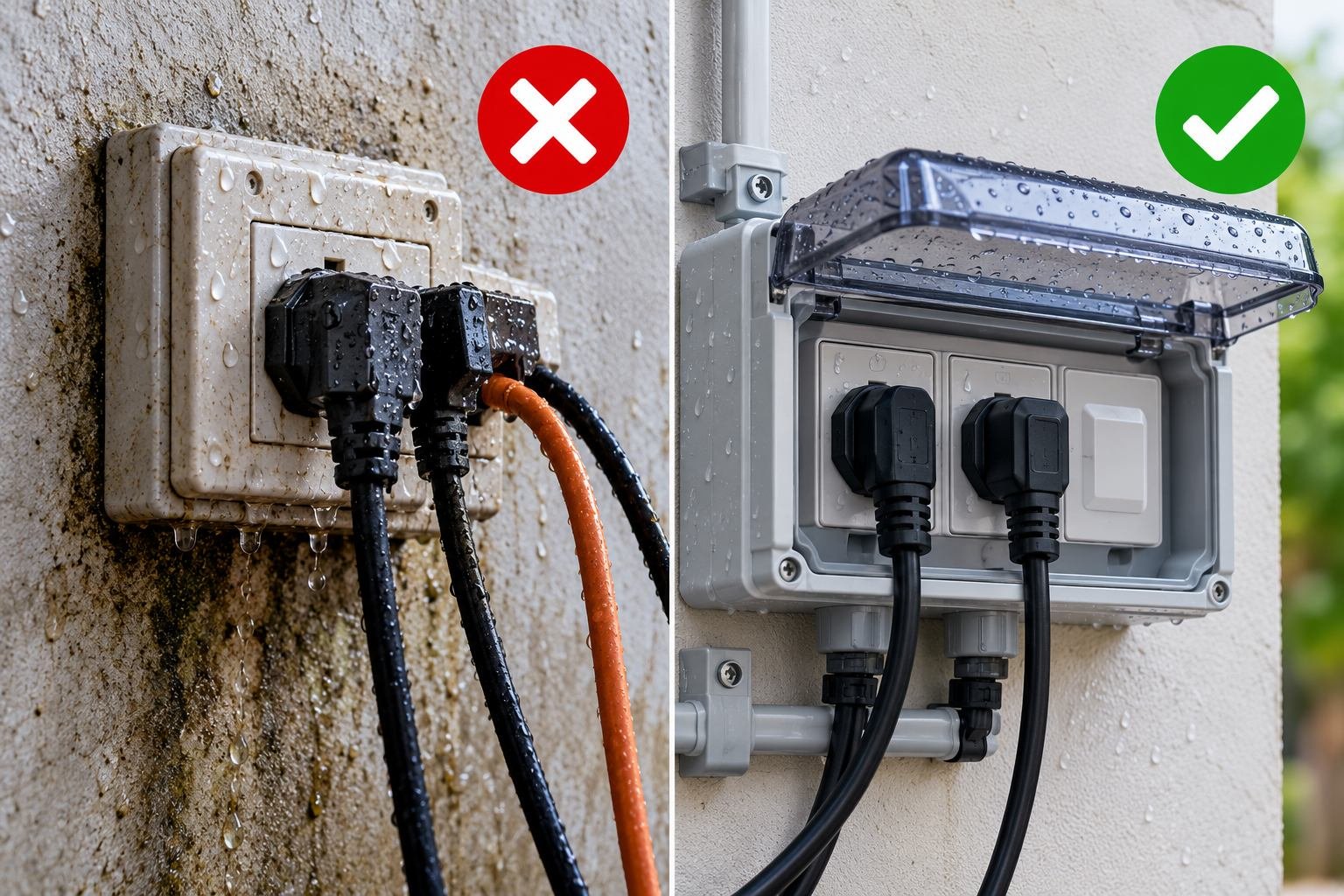
Water and electricity do not go well together. Electrical connections, extension boards, plugs, and power strips should not come into contact with water unless the equipment is made for it.
When installing electricity in environments such as the kitchen, bathroom, balcony, garage, and outdoors, it is important to consider the conditions of the environment.
If you have noticed water coming into contact with electrical outlets or equipment, do not touch the equipment unless there will be no danger of electricity getting into your body.
10. Avoid Hiding Too Many Cables Behind Furniture
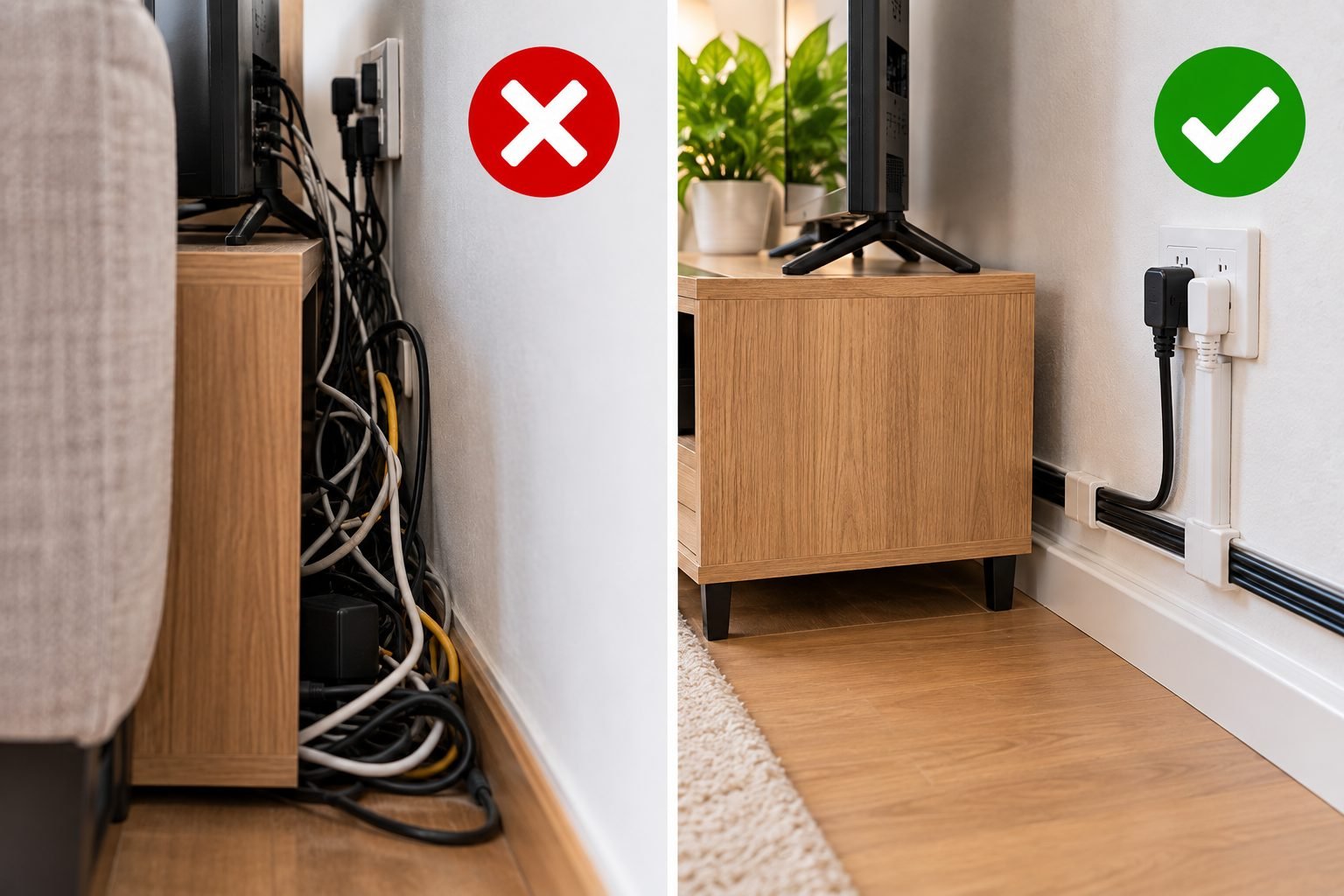
While it may seem convenient to stuff wires under the table or cabinet to create a cleaner look in the room, it may complicate the maintenance process and may cover broken wires or overloaded connections.
Keep enough distance for you to check the necessary connections. Also, do not place your power supply adaptors in places where they can get stuck or overheated.
Labeling of cables will be very useful when there are multiple devices that are connected together in one place.
The cables can be labeled in a simple way, like:
- TV Power Cable
- Router Cable
- Computer Cable
- Monitor Cable
- Printer Cable
- Speaker Cable
- Camera Cable
This simple act can go a long way in the future during maintenance work.
12. Replace Damaged Cable Management Products
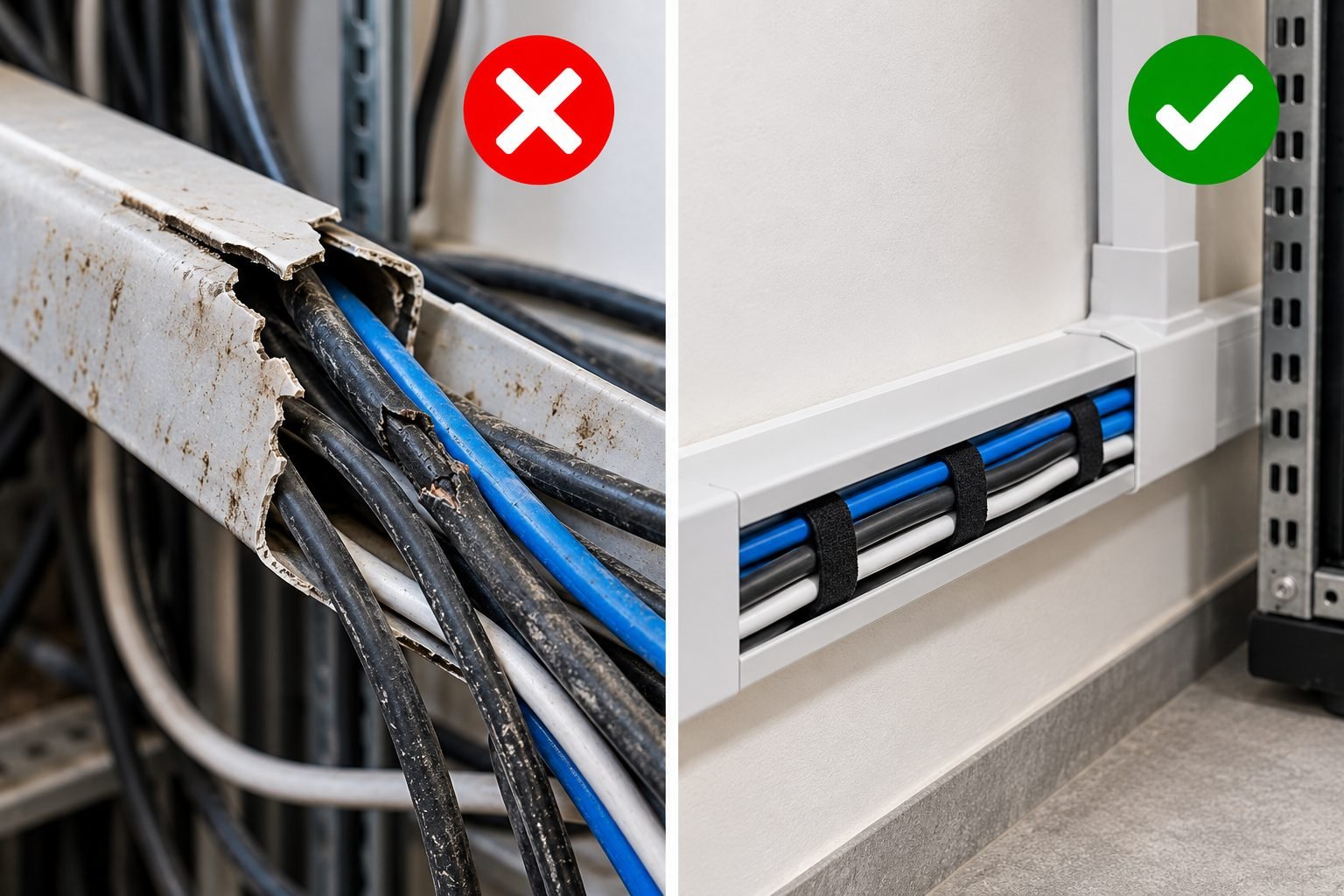
There are other cable management items that can deteriorate over time. For installations in outdoor areas, there may be environmental factors like exposure to sun, moisture, and varying temperatures.
In case a cable tie gets brittle, cracked, or becomes loose, then it is advisable to replace it with a proper cable management item.
It should not necessarily mean that all the cable management items will be indoor varieties when installing cables outside.
13. Plan Cable Management Before Installing New Equipment
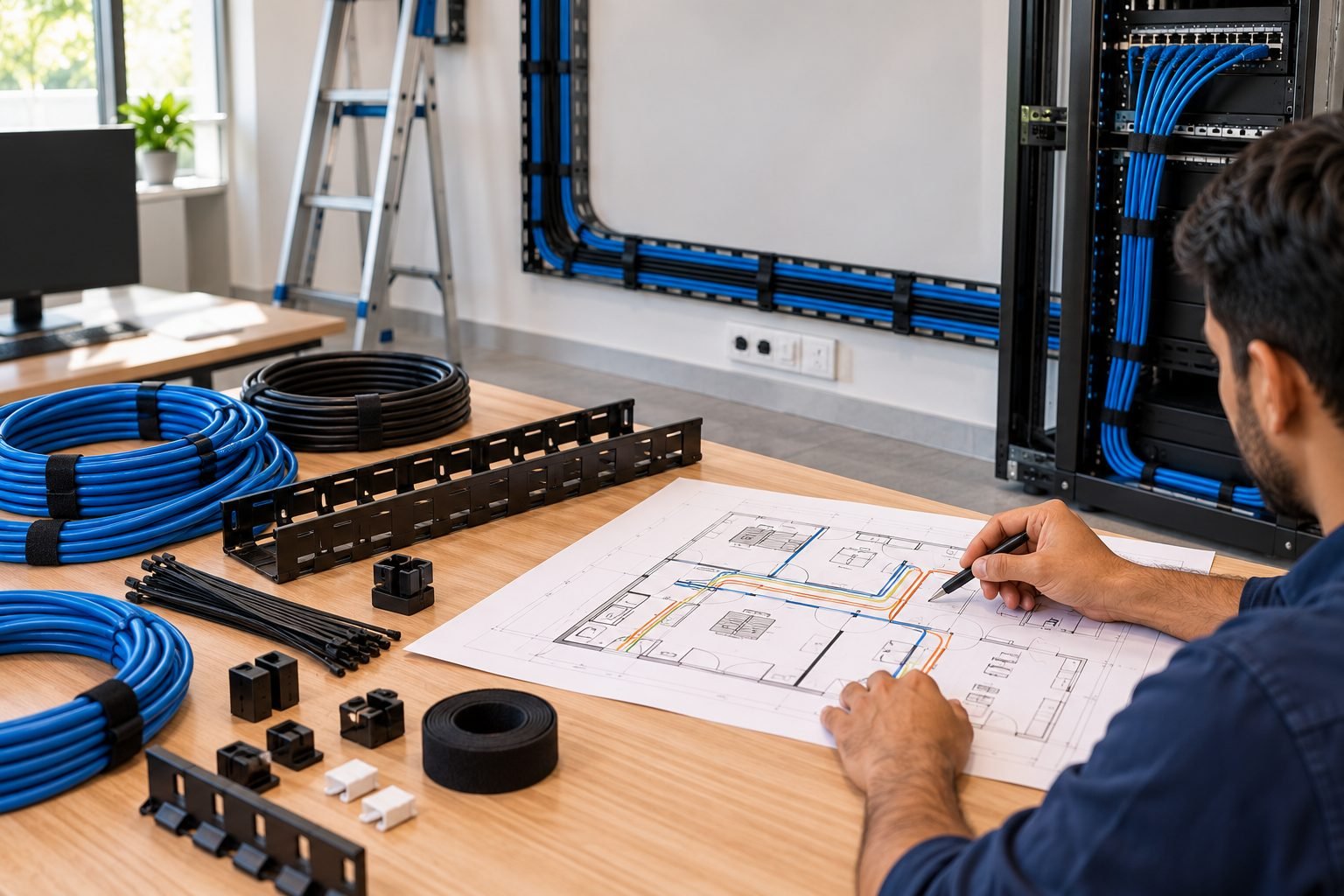
It is easier to organize cables before installing the devices.
Before you install such devices as a TV set, a computer, a router, a surveillance camera, or any other electronic device, you should take into account the following issues:
- The place where the device will be installed
- The place where the power supply will be installed
- The route of the cable
- The needed cable length
- Whether it is necessary to protect the cable
- The access to the cable for further maintenance work
Why Good Cable Management Matters
Besides improving the visual aspect of the wiring, proper management makes electrical systems easy to inspect and maintain.
It reduces the risks of pulling, crushing, tangling, or damaging the cables. With properly managed and well-routed cables, one would be able to identify where there is a problem easily.
But cable management must always be coupled with proper installation of electrical systems. Cable ties or other cable management accessories will not solve problems of overloaded circuits, damaged wiring, faulty connections or electrical system improperly installed.
Professional help is recommended in cases when electrical works involve circuits, terminals, distribution boards, or permanent wiring.
Proper home wiring management begins with small things that must be done. One should organize loose cables, avoid excessive bends, protect the wiring from moisture, look at damaged cables, and use appropriate cable management accessories.
Cable ties are used for organizing wires, but in some cases special electrical components like Bimetallic Cable Lugs are required depending on the connection.
The main thing here is to select the right accessory for the task. Proper cable management makes wiring safer and easier to inspect and maintain.
Frequently Asked Questions
1. What are cable ties used for?
Cable ties are used to bind and arrange cables and wires. They may assist to prevent tangles and spreading of cables on floors and workspaces.
2. Can cable ties be used for electrical wiring?
Yes, cable ties can be used to organize electrical wires but not too tight and the type of cable tie has to match the environment of installation.
3. What are Bimetallic Cable Lugs used for?
Bimetallic Cable Lugs are usually used to connect aluminium cables to copper points of connection in electrical applications where such issues arise due to connection of different types of conductive metals.
4. How often should home electrical cables be checked?
There is no exact interval for inspection of all home cables. Inspection has to be performed occasionally, especially for old, frequently used cables in demanding environments.
5. Can I use cable ties for the outdoor environment?
There are specific cable ties for outdoor use; otherwise, cable ties cannot endure outdoor weather conditions.
Related Post:
How Noise-Reduction Aluminium Windows Improve Living Comfort
How Choose Detergent Powder and Floor Cleaner for Daily Use
How You Can Use Polishing Pads and Backing Plates to Get Professional Quality Results
